











Phone Farm for Beginners: What You Need to Know Before Starting

In 2026, the phone farming industry has quietly grown into a multi-million dollar opportunity, yet many still underestimate its potential. With the right hardware, automation software, and network infrastructure, individuals can generate a steady passive income by leveraging networks of smartphones to perform automated tasks at scale. However, diving into phone farming without a clear understanding of the setup, equipment choices, and anti-detection requirements can lead to wasted time, lost accounts, and resources spent on the wrong gear. This article unpacks the essentials of phone farming for beginners — from the critical equipment you need and how to configure it, to the advanced tools that professional operators use to manage hundreds or thousands of devices efficiently. Whether you’re just getting started or looking to move beyond a basic setup, this guide offers actionable, experience-backed insights to ensure your phone farming operation is both profitable and built to last.
Understanding the Basics of Phone Farming
In 2026, phone farming has gained real traction as a viable method for generating passive income. The concept involves running networks of smartphones to complete automated tasks — watching ads, filling out surveys, building account trust on social platforms, or engaging with apps that reward activity with points or cash. What makes phone farming particularly attractive is its scalability: a single operator can manage dozens or even hundreds of devices using the right automation tools, turning what was once a manual hobby into a structured income operation.
The low barrier to entry is a major draw for beginners. Unlike many digital income strategies, phone farming doesn’t require coding skills or large upfront capital. Users set up a network of phones running automation software that handles repetitive tasks continuously, often running 24/7 with minimal intervention. In regions with low electricity and internet costs, the profit margins can be especially compelling — a setup of 20 well-configured devices can generate a modest but consistent monthly income that compounds as you add more devices and refine your workflows.
A practical starting point is a small farm of around ten phones. By dedicating an hour or two per day to monitoring and maintenance — checking for errors, pushing updates, and ensuring tasks are completing — a beginner can see meaningful earnings without full-time involvement. The key risk to understand upfront is account health: platforms like TikTok, Instagram, and Facebook use increasingly sophisticated detection to identify automated behavior, which is why device-level anti-detection infrastructure (not just software tricks) becomes critical as you scale. More on that in the advanced tools section.
For those just starting, the best approach is to begin with a manageable number of devices — five to ten — and build operational experience before scaling. This minimizes risk, reduces the learning curve, and gives you time to develop the maintenance habits that determine long-term profitability.

Essential Equipment for Starting a Phone Farm
Building a profitable phone farm requires thoughtful equipment choices across three layers: the devices themselves, the networking infrastructure, and the management tooling. Getting any one of these wrong creates bottlenecks that limit the whole operation.
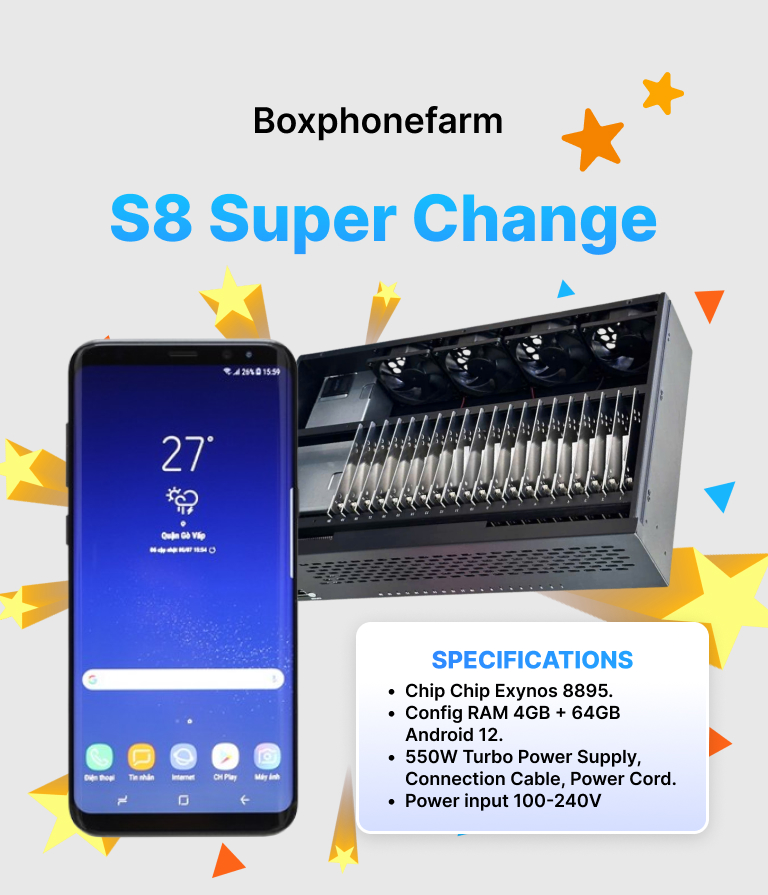
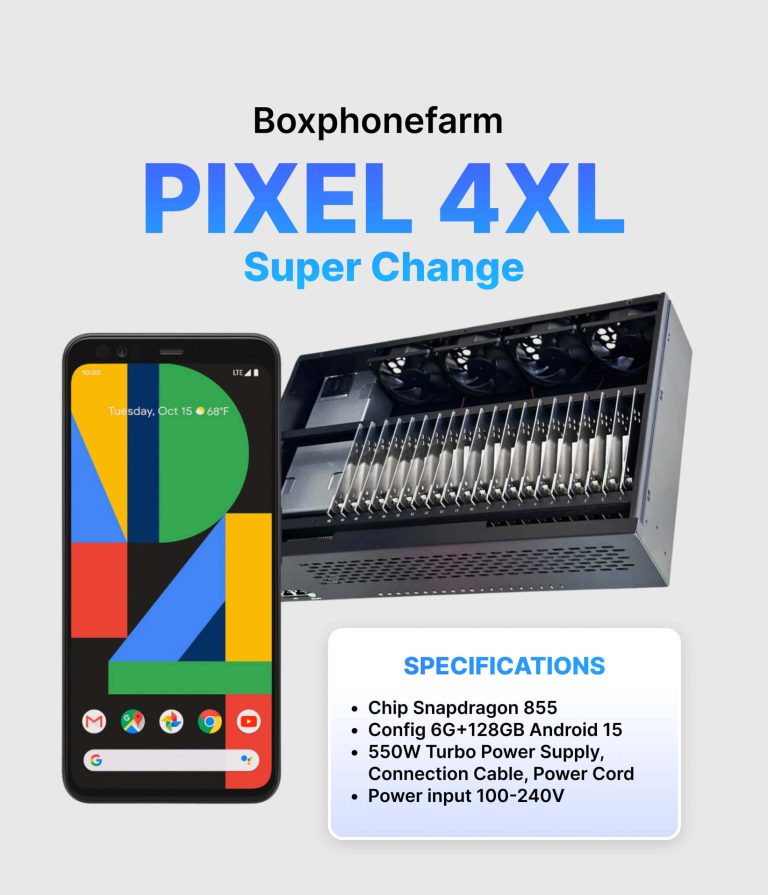
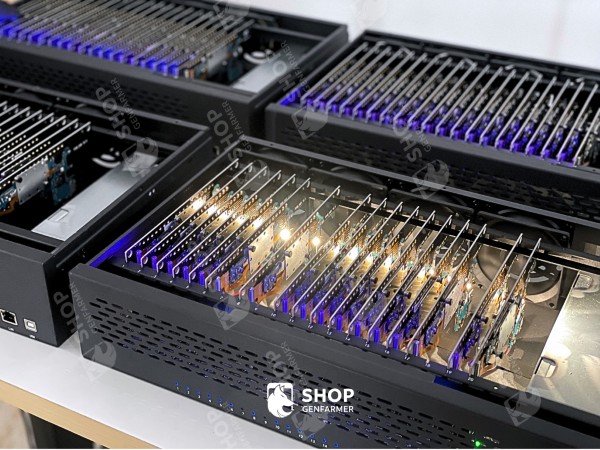
For devices, purpose-modified smartphone models are the most reliable foundation. GenFarmer’s Box Phone Farm lineup — which includes models like the S8 Change, S10 Change, and Note 10 Lite Change — is specifically engineered for phone farming environments. Each box houses up to 20 real Android devices running Android 14 with hidden ADB connections, deep-level device fingerprint spoofing, and full backup/restore capability. These anti-detection features are not available on standard consumer phones, and their absence is the most common reason new operators lose accounts at scale. Entry-level boxes start around $280–$640 for the S8/S8+ and scale up depending on performance tier.
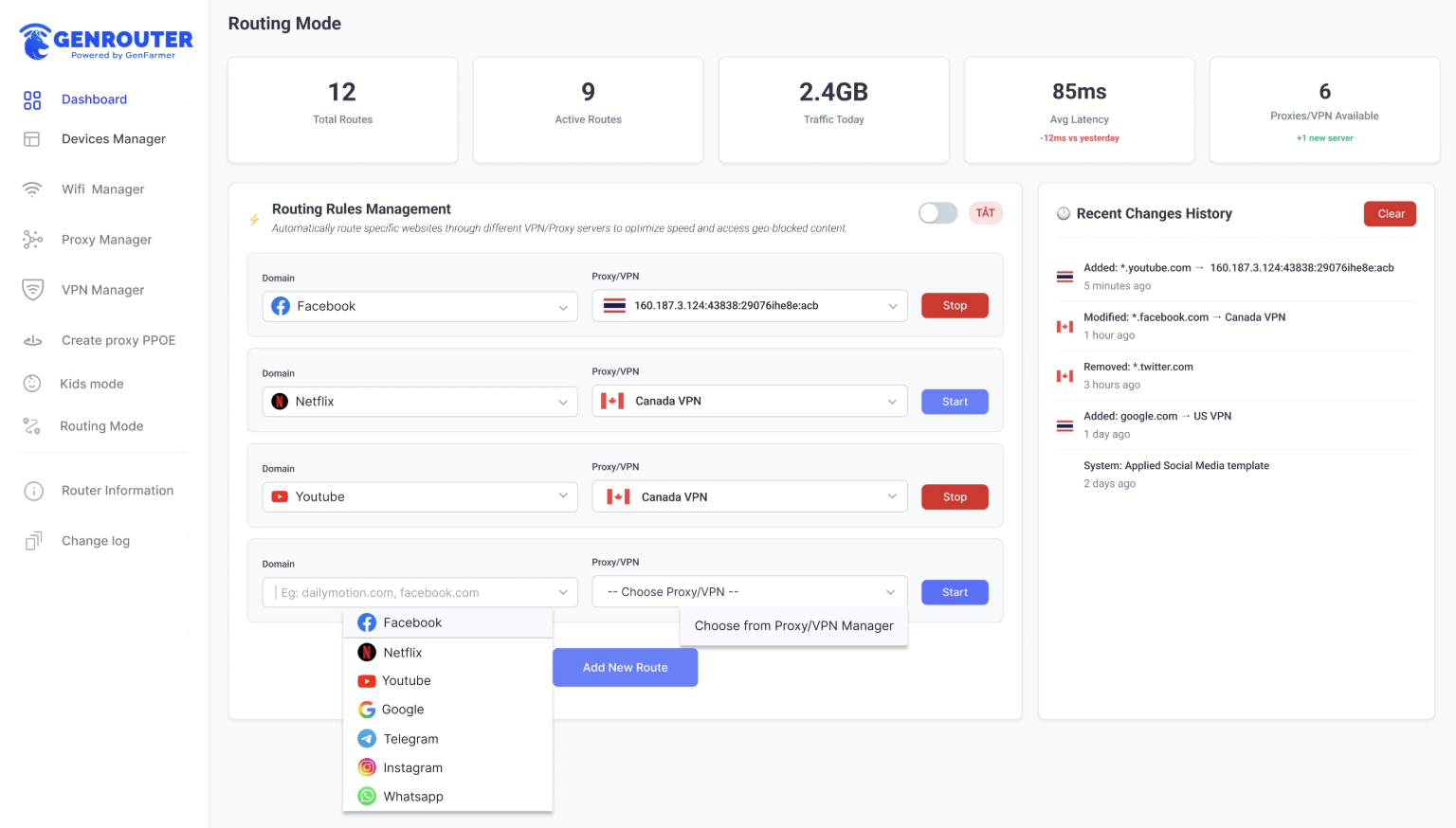
On the networking side, a purpose-built router is essential. A high-capacity router needs to manage multiple devices simultaneously while ensuring that each device presents a unique internet identity to platform algorithms. The GenRouter H3000 (~$180) is designed exactly for this — it assigns unique residential proxy IPs to each connected device, blocks traceroute scanning on the internal LAN, and supports OpenVPN, NordVPN, and ExpressVPN. For farms scaling beyond 50 devices, the MiniPC Router (~$360) supports 200–300 devices simultaneously with built-in load balancing.
Auxiliary accessories round out the setup. USB hubs are indispensable for charging multiple devices simultaneously, and power strips with surge protection safeguard against electrical issues that can cause unexpected downtime. A 10-port USB hub paired with surge-protected power strips keeps cabling organized and reduces the manual effort of managing individual devices. These items are inexpensive but make a real operational difference at scale.
Setting Up Your First Phone Farm
A well-structured setup process is what separates phone farms that run reliably for months from those that require constant firefighting. The configuration decisions you make at the start — device settings, network architecture, automation software — directly determine how much maintenance the operation demands on an ongoing basis.
Start with your device selection. Purpose-modified hardware from GenFarmer’s Box Phone Farm is the most reliable starting point because each device comes pre-configured with the anti-detection features that generic phones lack. Plan for a minimum of five devices to start — enough to see meaningful output while keeping the operation manageable. Configure each device to optimize battery longevity and resource usage: disable unnecessary background apps, reduce screen brightness, and ensure automation scripts are running on schedule rather than continuously polling for work.
Connect your devices through a GenRouter from the outset. This establishes unique IP identities for each device before you begin running any platform-facing tasks — meaning accounts built from day one have clean, individual network fingerprints rather than the shared-IP patterns that trigger detection. This is significantly harder to fix retroactively than to implement correctly from the start.
Use GenFarmer’s AI-powered automation packages to handle task scheduling, behavior randomization, and content interaction across your devices. The no-coding drag-and-drop interface means you don’t need technical expertise to set up complex workflows — the platform handles the logic of mimicking human behavior patterns that platforms use to evaluate account authenticity. Organize your devices physically using labeled multi-port USB hubs, and maintain a simple tracking sheet that logs each device’s status, last update, and any issues flagged. This documentation habit pays compounding dividends as your farm grows.
A beginner running ten properly configured devices with this stack can typically see meaningful passive income within the first few weeks — and more importantly, build a foundation that can scale to 50 or 100 devices without requiring a complete infrastructure rebuild.
Maximizing Efficiency in Phone Farming
Efficiency in phone farming has two dimensions: maximizing output per device and minimizing the operational cost per unit of output. Electricity can constitute up to 30% of total operational costs for a mid-sized farm, so both dimensions matter significantly for profitability.
On the output side, centralized automation software is the most impactful lever. GenFarmer’s platform manages app operations across all connected devices from a single control center, dynamically allocating tasks based on device availability and account health. Operators managing 50 devices with this kind of centralized automation consistently report 30–40% efficiency gains compared to managing devices manually or through fragmented third-party scripts. The AI behavior simulation also reduces the need for constant manual oversight — the system handles interaction timing, randomization, and content targeting automatically.
On the cost side, scheduling non-critical operations — software updates, device restarts, backup tasks — during off-peak electricity hours can reduce energy costs by approximately 20% annually. Purpose-built devices like GenFarmer’s Boxphones are also more energy-efficient than standard consumer smartphones running equivalent workloads, since they’re not running the background services and UI animations that drain power on retail handsets. Strategic airflow management — ensuring boxes are not stacked tightly and heat can dissipate — extends device lifespan and reduces replacement frequency, which is a significant cost category in larger operations.
Regular software updates and proactive device health monitoring prevent the cascading failures that cause extended downtime. An operator who catches a failing device early and swaps it out loses an hour of output. An operator who doesn’t notice until five devices are offline loses days. GenFarmer’s control center flags device anomalies automatically, enabling proactive maintenance rather than reactive repair.
Common Challenges and How to Overcome Them
Phone farming at scale presents a predictable set of technical and operational challenges. Recognizing them in advance — and having the right infrastructure already in place — is what allows experienced operators to maintain consistent output while beginners often stall out.
The most common technical challenge is IP management across a large device network. When multiple devices share the same IP address, platforms cluster them as a single automated entity and flag or ban the associated accounts. This is not a software problem — it requires hardware-level IP isolation. The GenRouter solves this by assigning unique residential proxy IPs to each connected device and blocking network-level scanning that could reveal the farm’s topology. Operators who integrate GenRouter report task completion rate improvements of around 25% compared to shared-IP setups, simply because their accounts are no longer being flagged for network fingerprint patterns.
The second major challenge is keeping automation behavior aligned with platform algorithm updates. Social platforms update their detection algorithms regularly, and automation scripts that worked last month can trigger flags today if they haven’t been updated to match new behavioral expectations. GenFarmer’s automation packages are continuously updated to reflect current platform requirements — this is one of the core advantages of using a maintained ecosystem rather than building custom scripts that you’re responsible for keeping current.
Device health management at scale is the third persistent challenge. With 50 or 100 devices running 24/7, individual device failures are inevitable. The question is whether you catch them early or late. Operators using GenFarmer’s centralized management platform can monitor all device statuses simultaneously and receive automatic alerts when a device falls offline or begins producing errors — enabling same-day resolution rather than discovering issues days later during a manual audit.
Advanced Tools for Professional Phone Farmers
Scaling a phone farm beyond entry-level setups requires tools that were purpose-built for the demands of professional operations — specifically, the combination of anti-detection hardware, network security, and AI-driven automation that allows a single operator to manage hundreds or thousands of devices without proportional increases in labor or risk.
Industry data consistently shows that professional phone farmers using the right technology stack achieve 50–60% efficiency gains over operators relying on manual management or generic automation tools. The following table summarizes the core tools in the GenFarmer ecosystem and their operational role:
| Tool/Technology | Key Feature | Pros | Cons |
|---|---|---|---|
| GenRouter | Unique residential IP per device, traceroute blocking | One-time cost, hardware-level protection, VPN support | Initial setup investment required |
| Boxphone S8 Change | Android 14, hidden ADB, device fingerprint spoofing | High stability, no recurring software fees, proven at scale | Requires correct initial configuration |
| GenCloudphone | Cloud-based device access, no physical hardware | Zero hardware investment, instant scalability | Subscription-based ongoing cost |
The GenRouter is the network security foundation — without hardware-level IP isolation, even the best device and software stack will eventually trigger platform detection at scale. The Boxphone S8 Change delivers the device-level anti-detection capabilities that standard consumer hardware cannot replicate. And GenCloudphone (GenFarmer’s Cloud Phone service) offers a hardware-free alternative for operators who want to scale output without managing physical inventory. Together, these tools form an integrated stack rather than a collection of disconnected solutions — which is what makes single-operator management of large farms operationally viable.
GenFarmer Solutions for Phone Farming
GenFarmer provides one of the most complete ecosystems available for professional phone farming, combining purpose-built hardware, network security infrastructure, and AI-driven automation software into a single integrated platform trusted by over 10,000 operators across Asia and internationally.
The Boxphone lineup — particularly the S8 Change model — delivers the anti-detection capabilities that serious phone farm operations require: Android 14 ROM, hidden ADB connections, deep-level device fingerprint spoofing across model, brand, IMEI, chipset, and serial number, plus full backup and restore functionality. These features are permanently built into the hardware at no recurring fee, unlike competitors who charge ~$10/device/month for equivalent software-level features. For a 20-device box, that’s $200/month in avoided overhead every single month.
The GenRouter complements the Boxphone hardware by securing the network layer. It creates residential proxies for each device, blocks internal LAN scanning, and supports major VPN protocols — providing the IP diversity that platforms require to treat each device as an independent, organic user. Where previous setups using generic VPNs resulted in shared-IP clustering and mass account flags, operations running GenRouter consistently report significantly lower account loss rates and more stable long-term performance.
GenFarmer’s AI automation packages complete the stack, providing no-coding automation for Facebook, TikTok, Instagram, and Spotify. These packages use AI to simulate natural human behaviors — scrolling patterns, interaction timing, content preferences — that platform algorithms use to evaluate account authenticity. The result is a system where one operator can manage thousands of devices, compared to the 20+ staff that would be required for equivalent manual operations, representing a 50% or greater reduction in labor costs in documented operator deployments.
Case Study: Successful Phone Farming Strategies
The following case study illustrates how a structured approach to equipment selection, network security, and automation can transform a small-scale phone farm into a scalable, low-overhead operation.
Context: A small tech entrepreneur began phone farming with 20 devices, targeting app engagement rewards and social media account trust-building across multiple platforms. The primary objective was to maximize earnings while keeping operational costs low enough to justify expansion.
Strategic Decisions: Rather than starting with generic consumer hardware and improvising the security layer later, the operator built on GenFarmer’s Boxphone infrastructure from the outset — specifically S8 Change boxes with Android 14 ROM and full fingerprint diversity configured. The GenRouter H3000 was deployed immediately to assign unique residential proxy IPs to each device, establishing clean account identities from day one. GenFarmer’s AI automation packages handled all task scheduling and behavior randomization through the no-coding platform interface.
Execution Model: The no-coding automation platform eliminated the need for manual intervention on routine tasks, reducing labor costs by approximately 70% compared to the manual baseline. A strict weekly maintenance schedule — software updates, device health checks, backup verification — was implemented from the start and handled in under two hours per week across all 20 devices. The GenRouter’s automated IP management meant zero manual proxy configuration was required as the operation ran.
Results: Within six months, revenue had grown sufficiently to justify expanding to 100 devices — without hiring additional staff. The same single-operator setup that managed 20 devices scaled to 100, demonstrating the linear scalability of the GenFarmer stack. Account loss rates remained significantly lower than industry averages throughout the expansion, attributed directly to the hardware-level anti-detection layer that had been in place from day one.
Strategic Takeaway: The most impactful decision was prioritizing infrastructure quality at the outset rather than minimizing initial spend. The upfront cost of purpose-built hardware and proper network security was recovered quickly through lower account loss, reduced labor overhead, and the ability to scale without infrastructure rebuilds. Operators who start with the right foundation scale faster and more profitably than those who optimize cost at launch and pay for it through recurring losses later.
Conclusion
Phone farming in 2026 offers a genuine and growing opportunity for passive income — but the gap between operators who build sustainable, profitable operations and those who stall out comes down to infrastructure quality, not effort. As this guide has outlined, the critical layers are device-level anti-detection hardware, network-level IP security, and AI-driven automation software. Operators who get all three right — as illustrated in the case study above — consistently achieve better account health, lower labor overhead, and faster scalability than those who cut corners on any one layer.
Having the right tools is what makes execution possible at scale. GenFarmer provides a complete, integrated ecosystem — from purpose-built Box Phone Farm hardware and the network security of the GenRouter, to the MiniPC for larger fleets and purpose-built AI automation packages for Facebook, TikTok, Instagram, and Spotify. Trusted by over 10,000 customers internationally, GenFarmer’s ecosystem is the proven foundation for phone farming at any scale.
Visit GenFarmer’s website to explore their full product range and take the first concrete step toward a more efficient and profitable phone farming operation.






 VOUCHER
 DEMO 1-1