


Best Bandwidth Sharing Apps for Phone Farms

Over 60% of mobile automation enthusiasts have turned to phone farms as a lucrative way to maximize their digital engagement strategies — yet the real differentiator between profitable operations and stalled ones often comes down to a single decision: how bandwidth is managed across devices. When dozens or hundreds of smartphones are running simultaneously, unoptimized bandwidth allocation creates bottlenecks that erode task completion rates, slow content delivery, and ultimately hurt earnings. This article breaks down the technical mechanics of how bandwidth sharing apps function, provides a data-backed comparison of the top options available in 2026, and shows how integrating GenFarmer’s hardware and automation ecosystem can amplify the performance gains these apps deliver. Whether you’re managing a 20-device starter setup or scaling toward hundreds of devices, the insights here will help you make more informed, more profitable decisions.
Understanding Phone Farms: A Modern Automation Tool
Phone farms have become a critical automation infrastructure for a wide range of industries, enabling cost-effective management of multiple devices at scale. At their core, phone farms consist of networks of smartphones executing automated tasks — app testing, social media account management, account trust-building, data collection, and engagement campaigns. The power of these setups lies in their scalability: by running the same workflows across dozens or hundreds of devices simultaneously, operators achieve output that would require large human teams to replicate manually.
The economic case is compelling. Automating tasks that would otherwise require sustained human oversight can reduce staffing requirements by 50% or more while maintaining or improving throughput. In digital marketing, phone farms enable parallel testing of ad strategies across platforms and audience segments. In app development, they allow simultaneous testing across diverse OS versions and device configurations. The operational efficiency gains compound as farms scale — which is precisely why bandwidth management becomes a critical variable at higher device counts.
Industries from e-commerce to content distribution are adopting phone farms at an accelerating pace. The common thread across all successful implementations is a shared infrastructure strategy: purpose-built hardware, intelligent automation software, and network management tools that keep each device operating efficiently and undetected. The latter point — avoiding platform detection — is what separates farms that sustain long-term account health from those that experience recurring bans and account losses.

Key Components of a Phone Farm
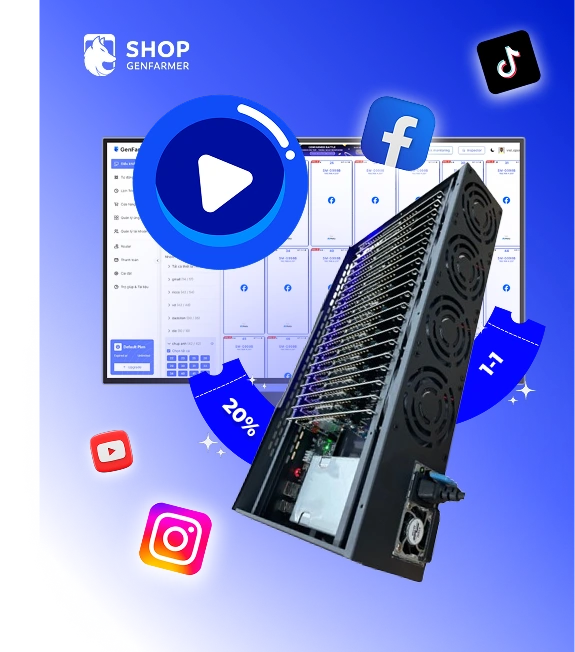
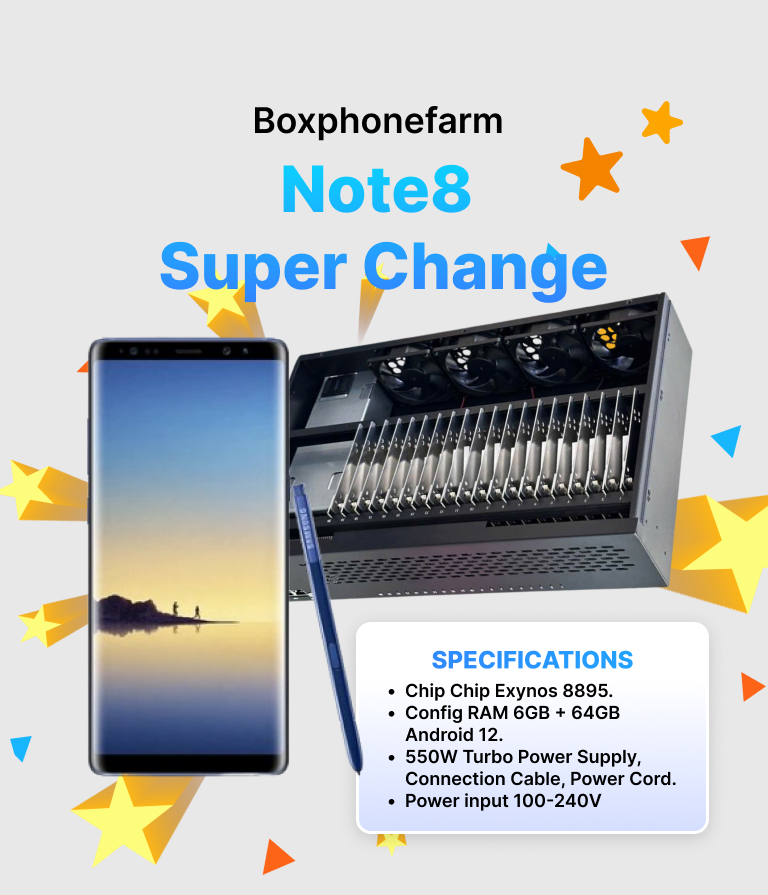
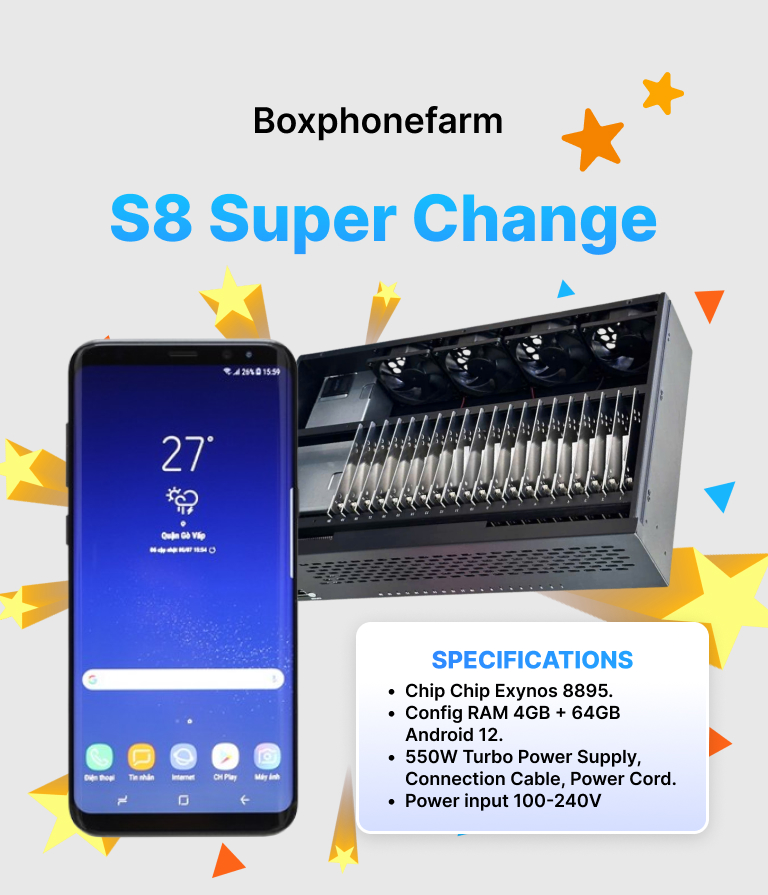
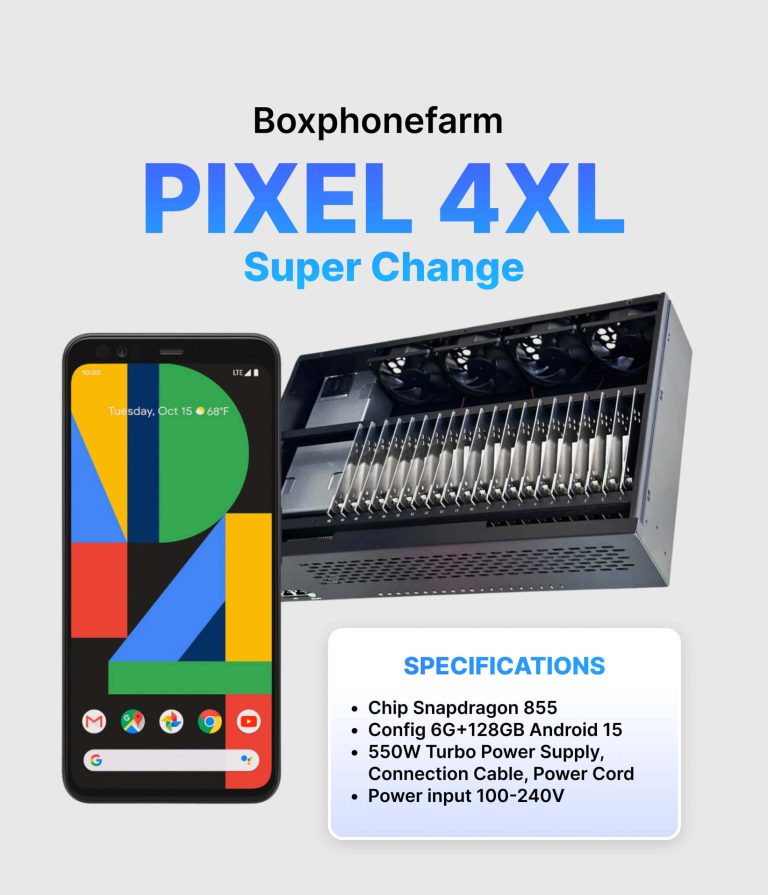
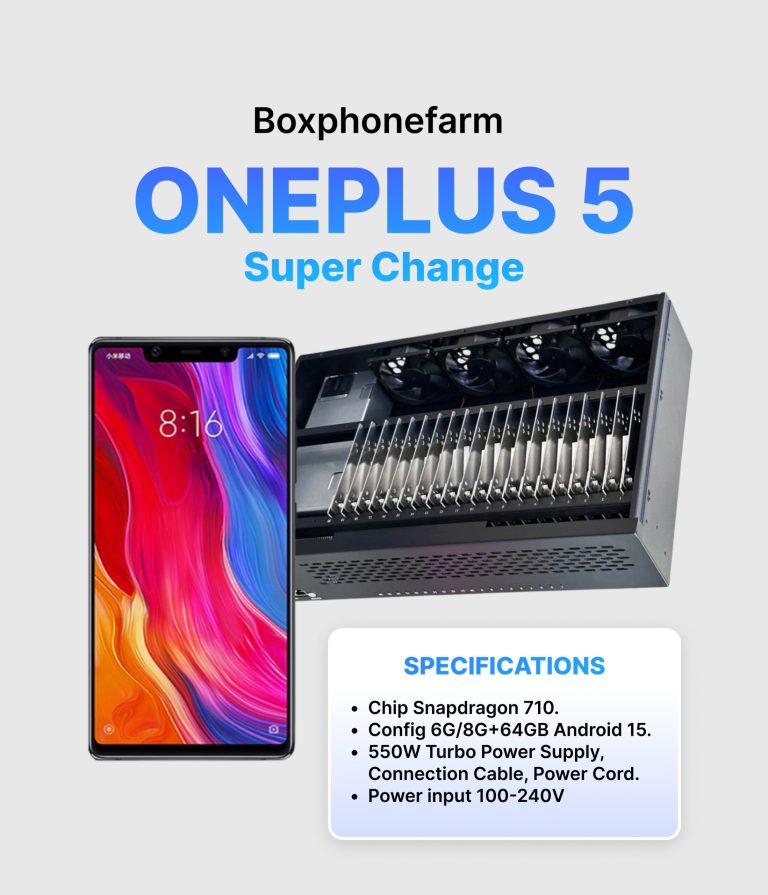
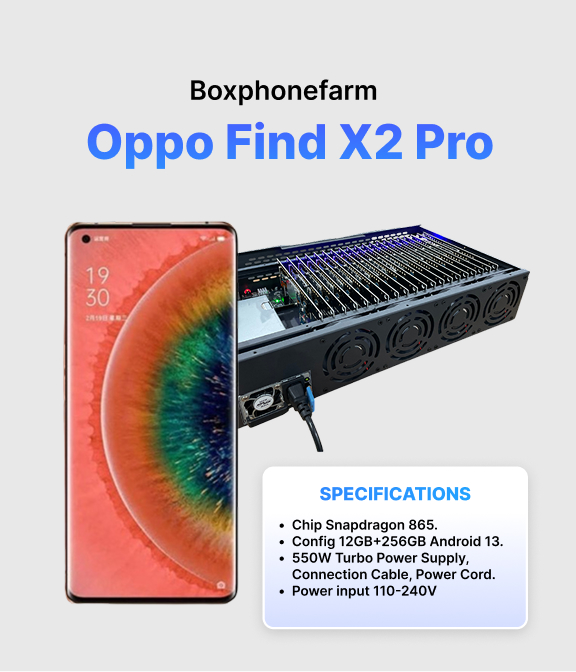
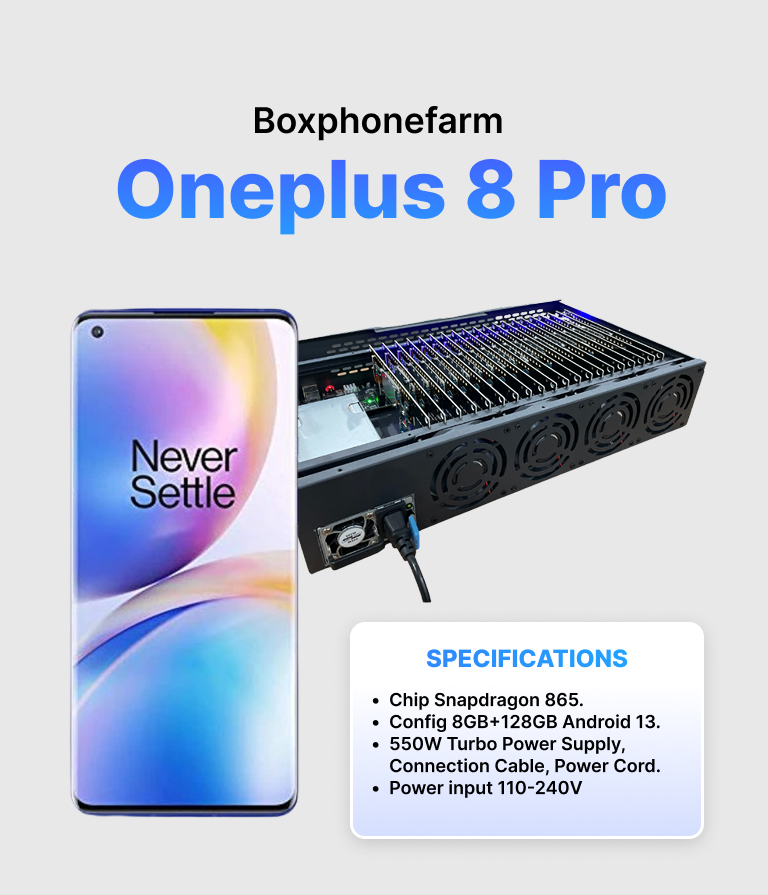
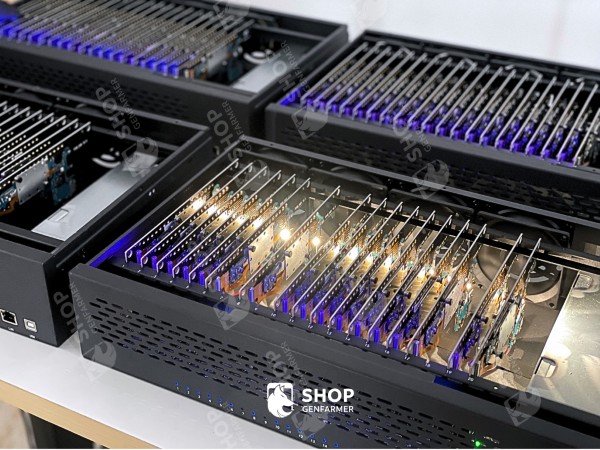
A production-grade phone farm requires the right hardware and software working in concert across three layers. On the hardware side, the device fleet itself is the foundation. GenFarmer’s Box Phone Farm lineup — including models like the S8 Change, S10 Change, and Note 10 Lite Change — is engineered specifically for phone farming environments, with each box housing up to 20 real Android devices running Android 14 with hidden ADB connections and deep-level device fingerprint spoofing. These anti-detection features are absent from standard consumer hardware and are the most common reason new operators lose accounts at scale.
Network infrastructure is the second critical layer. A purpose-built routing solution like the GenRouter assigns unique residential proxy IPs to each connected device, blocks traceroute scanning on the internal LAN, and supports major VPN protocols — ensuring that each device presents an independent, organic internet identity to platform algorithms. For farms scaling beyond 50 devices, the MiniPC Router supports 200–300 devices simultaneously with built-in load balancing. These tools are what convert a bandwidth sharing app’s optimization gains into sustained, detection-resistant performance.
The management layer — automation software — ties it all together. GenFarmer’s no-coding automation platform allows operators to control all connected devices from a single interface, scheduling tasks, pushing updates, monitoring performance metrics, and receiving automatic alerts when a device falls offline. The drag-and-drop interface requires no programming knowledge, making sophisticated multi-device orchestration accessible to operators at any technical level.
Common Challenges in Managing Phone Farms
Bandwidth limitations are the most operationally visible challenge in phone farm management. When multiple devices compete for shared internet resources without intelligent allocation, the result is elevated latency, inconsistent task execution, and lower earnings per device. This is the core problem that bandwidth sharing apps are designed to solve — but their effectiveness is bounded by the quality of the underlying network infrastructure.
Device synchronization is the second persistent challenge. Ensuring uniform software versions and consistent settings across a large fleet requires systematic tooling. Discrepancies in device state lead to inconsistent task outputs and make performance monitoring unreliable. Automation platforms that push updates and synchronize configurations across all devices simultaneously — like GenFarmer’s centralized control center — eliminate the manual effort that synchronization would otherwise require.
Security and detection avoidance are the most financially consequential challenges. With every device running internet-facing tasks, the risk of platform detection grows with scale. Strong security protocols — encrypted connections, IP isolation, and behavioral randomization — are not optional features but foundational requirements. Operators who treat these as afterthoughts consistently incur higher account loss rates than those who build anti-detection infrastructure in from day one. The GenRouter’s hardware-level IP management addresses this at the network layer, while GenFarmer’s AI automation packages handle behavioral randomization at the software layer.
Technical Insights: How Bandwidth Sharing Apps Work
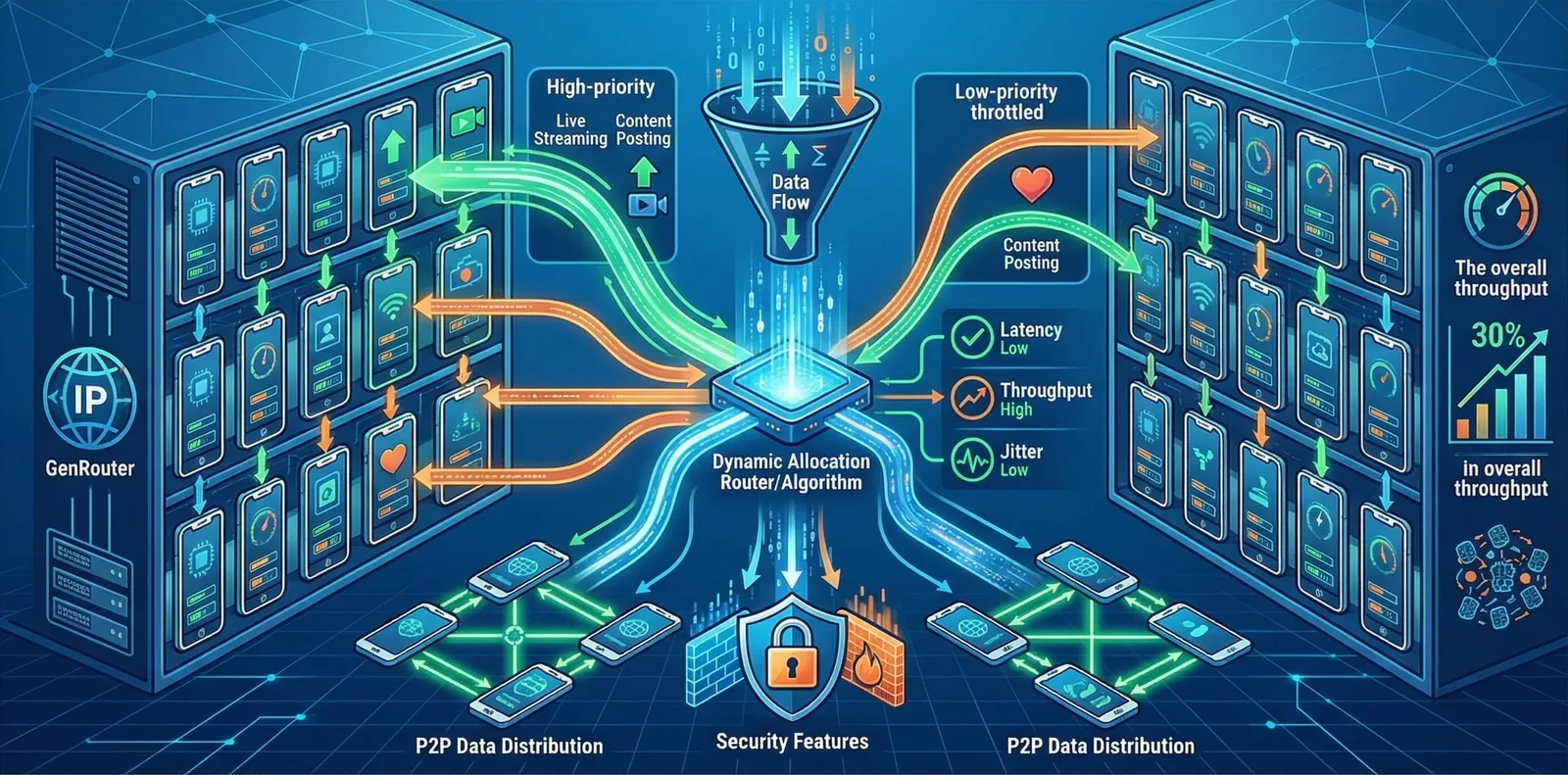
In phone farm environments, bandwidth sharing apps solve a specific problem: multiple devices competing for finite internet resources create uneven allocation that degrades performance across the fleet. These apps address this by leveraging peer-to-peer (P2P) technology to distribute internet traffic across devices, ensuring no single device becomes a bottleneck while higher-priority tasks receive proportionally more resources.
The core mechanism is a dynamic allocation algorithm that monitors real-time network conditions and device usage patterns, redistributing bandwidth continuously based on demand. Devices executing high-bandwidth tasks — posting real-time content, uploading media, engaging with live streams — receive more resources; idle devices or those on low-priority tasks are throttled. In a well-configured phone farm running a social media campaign, this kind of dynamic allocation can improve throughput by up to 30% compared to unmanaged setups, translating directly to faster task completion and higher engagement rates.
A practical example: a 500-device farm running simultaneous Instagram engagement campaigns across multiple accounts will see dramatically different performance depending on whether bandwidth allocation is managed or left to compete arbitrarily. With a properly configured bandwidth sharing app layered on top of a GenRouter (which handles IP isolation at the hardware level), each device gets both a clean network identity and an optimized share of available bandwidth — the two conditions that most directly determine sustained account health and task output.
One important caveat: bandwidth sharing apps can introduce latency if not correctly configured. Operators should prioritize apps with high configurability, stable update cadences, and robust support — and should treat app configuration as an ongoing task, not a one-time setup.
Evaluating App Performance: Key Metrics
Three metrics determine whether a bandwidth sharing app is genuinely improving phone farm performance or simply adding overhead. Latency — the time for data to travel between points — directly impacts real-time tasks like live engagement and content posting. Values below 100 milliseconds are generally acceptable; higher values create visible delays that degrade engagement quality. Throughput indicates the volume of data successfully transmitted in a given period; for moderate-scale operations, 50 Mbps may suffice, but farms above 100 devices typically require 100 Mbps or more to avoid bottlenecks. Jitter — variation in packet arrival times — is the most overlooked of the three, but it directly determines connection stability across the fleet. Low, consistent jitter is what enables smooth, sustained operation rather than unpredictable bursts and drops.
For operators running social media automation with GenFarmer’s AI automation packages, all three metrics matter because the platform’s behavior randomization depends on consistent timing — erratic jitter can disrupt the natural interaction patterns that keep accounts from being flagged. Selecting an app that maintains low jitter under load is as important as raw throughput capacity.
Security Features in Bandwidth Sharing Apps
Encryption and IP masking are the two security features that matter most in phone farm contexts. Encryption protects data in transit from interception; IP masking prevents platforms from clustering devices by network origin. Most leading bandwidth sharing apps include both, but their implementation quality varies significantly — which is why hardware-level IP isolation through a purpose-built router like the GenRouter remains the more reliable foundation, with bandwidth sharing app security serving as a complementary layer rather than a primary defense.
Regular updates are non-negotiable. Platforms continuously refine their detection algorithms, and an app that was providing adequate cover six months ago may no longer be effective today. Operators should track update release cadences for any app they deploy and treat version lag as a security risk. Similarly, GenFarmer’s automation packages are continuously updated to reflect current platform detection patterns — one of the concrete advantages of using a maintained ecosystem over custom-built scripts.
Comparing Top Bandwidth Sharing Apps for Phone Farms
Selecting the right bandwidth sharing app requires matching app characteristics to operational requirements. The table below compares the four leading options in 2026 across the dimensions that matter most to phone farm operators:
| App Name | Features | Pricing Model | User Ratings | Unique Selling Points | Drawbacks |
|---|---|---|---|---|---|
| Honeygain | Passive income, data encryption | Pay-per-traffic | 4.2/5 | Easy setup, secure payments | Limited to available data |
| PacketStream | Peer-to-peer, residential IPs | Pay-per-GB | 4.0/5 | High-quality IP addresses | Slower speeds at times |
| Peer2Profit | Unlimited devices, detailed stats | Pay-per-traffic | 4.1/5 | Scalable, transparent stats | Complex setup for beginners |
| IPRoyal | Global coverage, multiple devices | Pay-per-GB | 4.3/5 | Wide geographic reach | Requires frequent updates |
Honeygain is the most accessible entry point — its simple setup and reliable payout structure make it well-suited for operators new to phone farming or running smaller fleets. Its ceiling is the dependency on available traffic, which limits earnings potential at scale. PacketStream’s residential IP quality makes it valuable for operations where IP reputation matters, though intermittent speed issues can disrupt time-sensitive tasks. Peer2Profit’s unlimited device support and detailed stats make it the strongest choice for larger, data-driven operations — but its setup complexity means it rewards operators who invest time in configuration. IPRoyal’s global geographic reach is its clearest differentiator, making it the natural choice for farms targeting international platforms and audiences, with frequent update requirements being the main operational overhead. All four apps benefit significantly from being deployed on top of hardware-level IP isolation via a GenRouter — the combination of software-layer bandwidth optimization and hardware-layer IP diversity is what delivers the strongest detection resistance.
User Reviews and Feedback Analysis
Aggregated user feedback reinforces the comparative picture from the table above, with a few additional nuances worth noting for operators making deployment decisions.
| App Name | Positive Feedback | Common Complaints |
|---|---|---|
| Honeygain | Easy to use, reliable payouts | Slow earning rate |
| PacketStream | High-quality IPs, fair pricing | Occasional connection issues |
| Peer2Profit | Detailed stats, good customer support | Initial setup complexity |
| IPRoyal | Extensive coverage, good speed | Frequent app updates required |
Honeygain’s slow earning rate is most acutely felt in larger farms — the per-traffic model caps out at lower absolute returns as fleet size grows, which is why many operators use it primarily for less active or lower-priority devices. PacketStream’s connection stability issues are frequently tied to network-level IP conflicts rather than the app itself — a problem that largely disappears when devices are running behind a GenRouter with hardware-level IP isolation. Peer2Profit’s setup complexity is the most significant barrier for new operators, but users who invest the time in configuration consistently report among the best ROI of the four options. IPRoyal’s update frequency is less burdensome when integrated into a centralized management workflow — operators using GenFarmer’s platform can push app updates across the entire fleet simultaneously, eliminating the manual overhead that makes frequent updates feel costly.
Case Study: Successful Phone Farm Using Bandwidth Sharing Apps
Context: A medium-sized phone farm operating 500 devices faced a familiar challenge: bandwidth was being distributed unevenly across the fleet, creating performance bottlenecks on high-priority devices during peak campaign windows. The objective was to increase overall throughput and profitability without adding network infrastructure costs.
Strategic Move: Management deployed a dual-app strategy — Honeygain for the roughly 60% of devices running lower-intensity, passive tasks, and IPRoyal for the 40% engaged in international audience targeting. Both apps were layered on top of a GenRouter infrastructure that provided unique residential proxy IPs to each device, eliminating the shared-IP patterns that had previously triggered platform flags.
Execution Model: Device allocation was reviewed weekly against traffic pattern data and per-device earnings metrics, with shifts between apps made in response to campaign performance. GenFarmer’s AI automation packages handled task scheduling and behavior randomization across all 500 devices from a single control center, while the GenRouter’s automated IP management eliminated manual proxy reconfiguration when devices were reassigned between app groups.
Why It Worked: The dual-app approach matched bandwidth allocation strategy to task priority — passive income generation through Honeygain for lower-intensity devices, higher-traffic international engagement through IPRoyal for high-priority campaigns. The GenRouter’s IP isolation layer ensured that the increased network activity from 500 simultaneously active devices didn’t produce the clustering patterns that platforms use to identify automation. The result was a measurable improvement in task completion rates and campaign performance without additional hardware investment.
Strategic Takeaway: The most effective bandwidth sharing strategy is not choosing a single best app but matching app capabilities to device role — and ensuring the underlying network infrastructure provides the IP diversity that makes any app’s performance gains sustainable. For operations managing 100+ devices, the combination of a dual-app approach and hardware-level IP isolation consistently outperforms either element deployed alone.
GenFarmer Solutions: Enhancing Phone Farm Efficiency
Bandwidth sharing apps optimize how existing internet capacity is distributed across devices — but their effectiveness is bounded by the quality of the network and hardware infrastructure they’re running on. GenFarmer provides the purpose-built ecosystem that makes bandwidth optimization sustainable at scale: the Boxphone hardware lineup, the GenRouter for hardware-level IP management, and an AI-powered automation platform that handles task scheduling, behavior randomization, and fleet-wide monitoring without requiring coding expertise.
The Boxphone devices — particularly the S8 Change and S10 Change models — are engineered for the specific demands of continuous 24/7 automation. Their hidden ADB connections and deep-level device fingerprint spoofing ensure that the anti-detection layer holds even as bandwidth utilization increases. A farm that runs at 30% higher throughput because of bandwidth sharing app optimization, but does so with shared IP addresses or detectable ADB signatures, will see that performance gain converted into account flags rather than revenue. The GenRouter’s residential proxy creation and traceroute blocking close that gap at the network level.
Operators who have integrated GenFarmer’s full stack — Boxphone hardware, GenRouter networking, and AI automation packages for Facebook, TikTok, Instagram, and Spotify — consistently report 30–50% reductions in connectivity issues and significant improvements in account trust scores. With over 10,000 operators across Asia and internationally using GenFarmer’s ecosystem, the performance and reliability claims are backed by sustained real-world deployment rather than controlled benchmarks.
Integrating GenFarmer Products into Your Phone Farm
To fully capitalize on GenFarmer’s offerings, a structured approach to integration is essential. Here is a step-by-step guide to incorporating GenFarmer products into an existing phone farm setup:
- Assessment and Planning: Begin by evaluating your current phone farm infrastructure. Identify the number of devices and existing connectivity solutions. Understanding the baseline performance metrics will help in measuring the improvements post-integration.
- Boxphone Setup: Deploy Boxphone devices, which are engineered for high-efficiency continuous operation. Configure each device with the appropriate Android 14 ROM settings, fingerprint diversity parameters, and ADB hiding — ensuring anti-detection is in place before any platform-facing tasks begin.
- GenRouter Configuration: Connect the GenRouter to your network and configure residential proxy assignments for each device. The GenRouter’s traceroute blocking and VPN protocol support (OpenVPN, NordVPN, ExpressVPN) ensure that increased bandwidth utilization from your sharing apps doesn’t create detectable network patterns. For fleets exceeding 50 devices, deploy the MiniPC Router for load-balanced support of 200–300 simultaneous devices.
- Automation Platform Integration: Deploy GenFarmer’s AI automation packages to handle task scheduling, behavioral randomization, and content interaction across your devices. The no-coding drag-and-drop interface enables sophisticated multi-device orchestration without technical expertise. Configure bandwidth sharing app assignments through the same dashboard to centralize fleet management.
- Performance Monitoring and Adjustment: After integration, track connection stability, account trust scores, per-device earnings, and task completion rates continuously. Use these metrics to optimize both bandwidth sharing app assignments and automation parameters, ensuring the setup maintains peak efficiency as platform algorithms evolve.
Operators who complete this integration consistently report reduced manual intervention requirements — allowing more focus on strategic growth decisions rather than reactive operational troubleshooting. Whether you’re managing connectivity challenges, scaling from 50 to 500 devices, or optimizing an existing large-scale operation, GenFarmer provides the infrastructure layer that converts bandwidth optimization into sustained, detection-resistant performance.
Conclusion
Bandwidth sharing apps solve a real and quantifiable problem in phone farm operations — unoptimized traffic allocation across multiple devices degrades throughput, slows task completion, and erodes earnings potential. Selecting the right app requires matching its capabilities to your operational profile: Honeygain for simplicity and passive income on lower-priority devices, PacketStream for IP reputation-sensitive tasks, Peer2Profit for large-scale data-driven operations, and IPRoyal for international audience targeting. But the performance gains any of these apps deliver are bounded by the quality of the underlying infrastructure — and that’s where the hardware and network layer becomes decisive.
GenFarmer provides the purpose-built ecosystem that makes bandwidth optimization sustainable at scale. The Box Phone Farm hardware delivers device-level anti-detection that standard consumer phones cannot replicate. The GenRouter provides hardware-level IP isolation that converts throughput gains into clean, detection-resistant traffic. The MiniPC Router scales this to 200–300 devices. And GenFarmer’s AI automation packages handle behavioral randomization and centralized fleet management — the operational layer that keeps everything running without constant manual oversight. Trusted by over 10,000 operators internationally, this integrated stack is the proven foundation for phone farming operations that prioritize both performance and long-term account health.
Visit GenFarmer to explore their full product range and take the next step toward a more efficient, scalable, and profitable phone farm operation.






 VOUCHER
 DEMO 1-1