











How to Start a Phone Farm: Step-by-Step Beginner Guide

Did you know that experienced phone farm operators are generating over $500 per month in passive income — using devices they already own? While this side hustle is gaining traction fast, most people still don’t know where to start. A phone farm is a network of smartphones running reward-based apps that pay for simple tasks like watching videos, clicking ads, or completing surveys. But building one that actually earns requires more than just charging a few old phones. In this guide — based on real-world phone farming experience — you’ll learn exactly how to set up your first phone farm, choose the right devices and apps, automate operations, and protect your investment. Whether you’re starting from zero or scaling an existing setup, every section gives you actionable steps you can apply today.
What Is a Phone Farm?
A phone farm is a scalable passive income system built on multiple smartphones performing automated, repetitive digital tasks. In 2026, phone farming has become one of the most accessible entry points into passive income — requiring no coding skills, no content creation, and no prior tech background.
Each device in a phone farm runs reward-based applications — video streaming platforms, survey apps, ad-click networks — that pay users in cash, gift cards, or cryptocurrency. The more devices running simultaneously, the higher the cumulative earnings. A 20-device farm running optimized video apps, for example, can realistically generate enough monthly income to cover internet and utility bills.
From a practical standpoint, the initial investment is modest. Smartphones can be sourced second-hand at low cost, and the ongoing requirements are straightforward: a stable Wi-Fi connection, reliable power, and an automation system to keep everything running without constant manual oversight.
Here’s a real-world example: a tech-savvy user builds a 10-device farm, carefully selects high-payout apps, and uses basic automation to schedule tasks. Within the first month, the farm covers their monthly internet bill — with room to scale. This is the core value proposition of phone farming: low barrier to entry, predictable operation, and income that grows with the size of your setup.
The key to success is not the number of devices alone — it’s the combination of smart app selection, efficient management, and gradual scaling. Start small, validate your setup, then expand with confidence.
How to Set Up a Phone Farm
A productive phone farm rests on three pillars: the right devices, a reliable network, and an efficient power management system. Cutting corners on any one of these will directly limit your earnings and increase maintenance overhead.
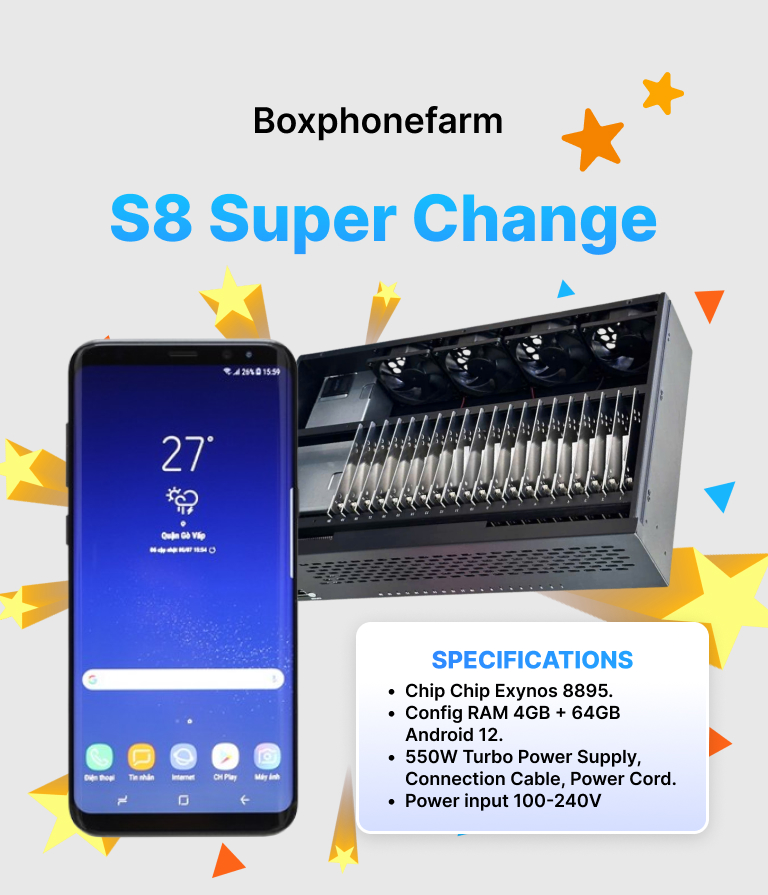
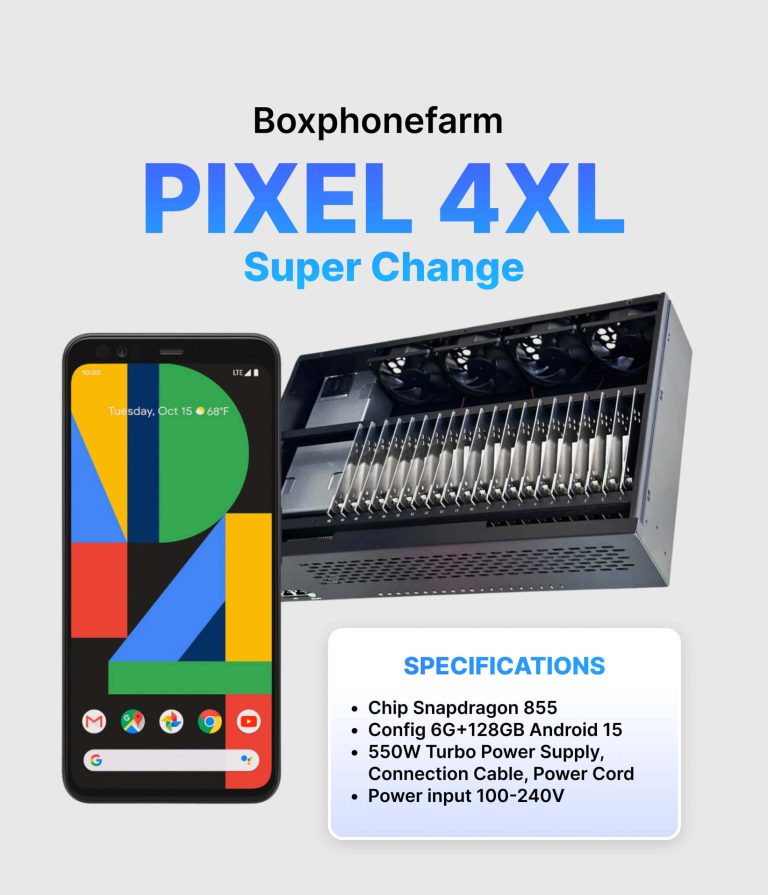
Device selection is your first critical decision. Budget devices may seem appealing, but phones with insufficient processing power or poor battery life create constant downtime — which kills passive income. From hands-on testing, mid-range Android devices with at least 3GB of RAM perform best for continuous multi-app operation. The Samsung Galaxy S8 remains a popular choice in 2026: it’s affordable second-hand, handles simultaneous app loads well, and its battery holds up under extended use without chronic overheating.
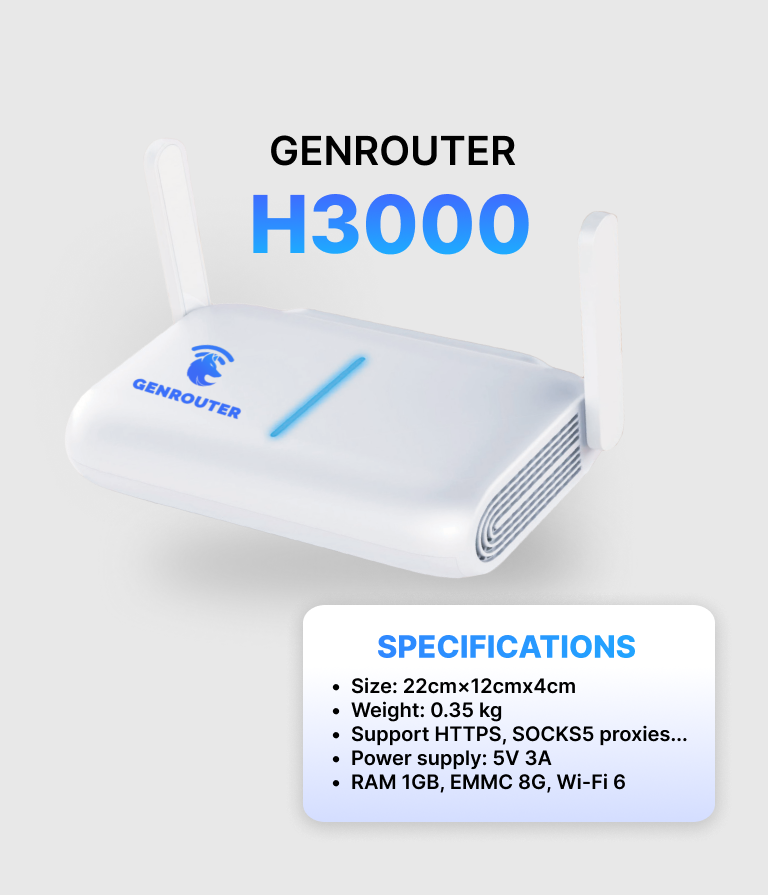
Network infrastructure is equally critical. A consumer-grade router will bottleneck a farm of 10+ devices. You need a router built for high-density simultaneous connections. The GenRouter is purpose-built for phone farm environments — it supports large-scale operations with stable bandwidth distribution and IP isolation to prevent account bans across devices.
Power management directly affects your operating costs. A farm running 24/7 accumulates significant electricity usage. Smart power strips and programmable timers let you schedule device downtime during off-peak hours, cutting energy consumption by up to 20% without affecting overall output. Investing in energy-efficient device models amplifies these savings further.
A practical benchmark: a 50-device farm using efficient Android models, a high-capacity router, and a smart power schedule operates with minimal troubleshooting and strong uptime — freeing the operator to focus on scaling rather than firefighting.
The right foundation makes everything else easier. Prioritize quality hardware from the start, build with scalability in mind, and monitor performance metrics from day one to catch inefficiencies early.
Step-by-Step Guide to Setting Up Your First Phone Farm
Step 1 — Plan Your Budget and Physical Setup
Before buying a single device, define your budget and goals. A realistic starting budget of $500–$1,000 will fund a 10–20 device setup, covering phones, power strips, and basic networking gear. This is enough to validate your approach before committing to a larger investment.
For physical space, prioritize airflow. Devices running continuously generate heat — open shelving or a dedicated rack setup with spacing between devices prevents thermal throttling and prolongs hardware life. Position your setup near power outlets to keep cable management clean and reduce tripping hazards. Set realistic income expectations early: a 10-device starter farm won’t replace a salary, but it validates the model. Scaling to 50 devices with reinvested earnings can realistically increase output by 200% or more, depending on app performance.
Step 2 — Select and Configure Your Devices
Android devices dominate phone farms in 2026 for good reason — they’re affordable, widely available second-hand, and offer the flexibility needed to run reward apps without heavy restrictions. Prioritize models with at least 2–3GB RAM and a processor capable of handling 3–5 apps simultaneously without lag.
Once devices arrive, configure each one systematically: install the latest OS updates, disable unused features (Bluetooth, GPS, NFC, background sync), and strip out pre-installed bloatware. These steps reduce CPU and battery drain significantly. Install a device management app to centralize monitoring — this becomes essential as your farm grows beyond 10 devices.
Step 3 — Configure Your Network
Your network is the circulatory system of your phone farm. A poor connection means lost task completions and interrupted earnings. Use a high-speed broadband connection of at least 100 Mbps as your baseline — more if you’re running 20+ devices.
Configure your router with Quality of Service (QoS) settings to prioritize farm traffic and prevent any single device from hogging bandwidth. If your farm spans a large physical area, a Wi-Fi extender ensures consistent signal strength across all devices. For added protection and to prevent IP-based bans from reward apps, a VPN adds a practical layer of security at the network level. Restart your router weekly as a minimum maintenance habit to clear connection logs and refresh IP assignments.
How to Improve Phone Farm Efficiency
Hardware gets your farm running. Efficiency is what makes it profitable. Based on operator data, automation alone can increase phone farm productivity by up to 40% — making it the single highest-leverage improvement you can make after your initial setup.
Automation eliminates the manual overhead that makes phone farming unsustainable at scale. Multi-device management software allows you to schedule tasks, rotate apps, monitor real-time performance metrics, and trigger actions across all devices simultaneously. The GenFarmer automation platform is built specifically for this environment — it handles hundreds of devices with no coding required, supports task scheduling, and provides stability monitoring that flags underperforming devices before they drag down overall output.
App selection determines your earning ceiling. Not all reward apps are equal — focus on platforms that offer consistent per-action payouts for passive tasks like video watching. In 2026, cryptocurrency reward apps have seen a 25% increase in adoption among phone farm operators, offering higher per-task returns compared to traditional cash-back platforms. Rotate your app mix regularly: track payout rates, read community forums, and replace underperformers quickly.
Task scheduling is an underutilised efficiency lever. Running tasks overnight — when residential bandwidth usage is lower — maximises available speed per device and reduces competition for network resources. Farms with optimised scheduling report up to a 15% productivity increase compared to unscheduled operations running the same hardware.
The compounding effect of automation + smart app selection + scheduled operation is significant. Apply all three consistently and your farm will outperform setups twice its size running without optimisation.
Security and Maintenance
A phone farm is an investment. Protecting it requires the same discipline you’d apply to any business asset. Mobile malware attacks increased by 25% between 2024 and 2025, and phone farms — with multiple devices running third-party apps continuously — are a higher-risk environment than a standard personal phone setup.
A multi-layered security approach is non-negotiable. At minimum, this means: trusted antivirus software on every device, automatic OS updates enabled across the farm, firewall protection at the router level, and physical security for the hardware itself. Phone farms studied in 2025 that ran comprehensive security protocols experienced 30% fewer operational disruptions than those operating without structured security measures.
The most common vulnerability isn’t sophisticated hacking — it’s neglected updates. An operator who skips OS patches to avoid downtime is trading short-term convenience for long-term exposure. Conversely, farms running automated update systems reported a 15% improvement in device stability and cut manual maintenance time by 20%. Automate your updates; schedule them during low-earning windows to minimise revenue impact.
Beyond security, establish a regular maintenance routine: weekly system checks, monthly physical cleaning to prevent dust-related overheating, and a live performance dashboard tracking uptime, app output, and anomalies per device. Catching a failing device early costs you an afternoon; catching it late costs you weeks of lost earnings and potential hardware replacement.
Treat maintenance as a revenue activity, not a cost — because every hour of uptime is income.
GenFarmer Solutions for Advanced Phone Farming
As phone farm operations scale, the gap between manual management and purpose-built tooling becomes impossible to ignore. GenFarmer develops hardware and software specifically engineered for the demands of professional phone farming — combining device management, network infrastructure, and automation into a unified ecosystem.
Box Phone Farm Hardware
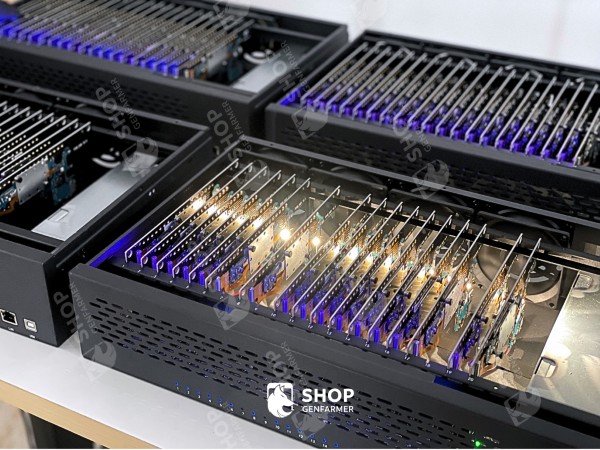
GenFarmer’s Box Phone Farm is purpose-built for high-density operation. Each unit supports up to 100 devices simultaneously, with high-capacity processors and an integrated cooling system designed for 24/7 continuous use. Unlike conventional DIY racks that require constant manual intervention, the Box Phone Farm architecture reduces overheating risk and device failure rates significantly. Operators running large-scale marketing campaigns or app-testing workflows report measurable improvements in uptime and consistent output stability compared to ad-hoc hardware setups.
GenRouter & MiniPC for Network Management
The GenRouter solves one of phone farming’s most persistent problems: multi-account detection leading to bans. Its IP isolation technology assigns each device a unique IP footprint, making simultaneous multi-account operation significantly safer. Beyond security, the GenRouter delivers stable, high-density bandwidth distribution that keeps every device performing at full capacity — no bottlenecks, no dropped connections.
For operators who need even more processing power at the network level, the MiniPC pairs seamlessly with the GenRouter to handle compute-intensive automation tasks locally — reducing latency and improving response times across the entire farm.
Cloud Phone — Scale Without Physical Hardware
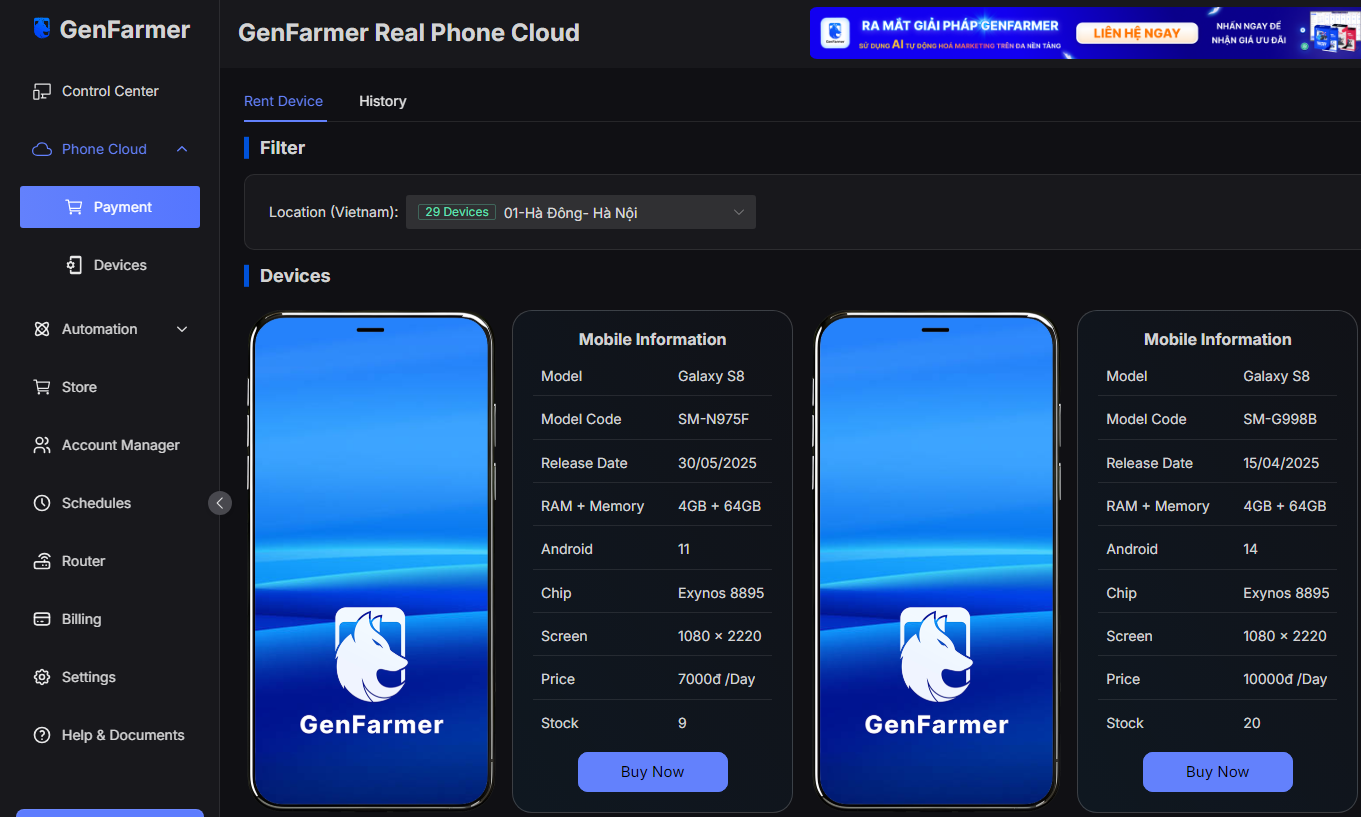
Not ready to invest in physical devices? GenFarmer’s Cloud Phone service lets you run virtual phone instances remotely — no hardware to buy, no power costs, no physical space required. It’s an ideal entry point for testing app performance and automation workflows before committing to a full physical setup, or a flexible complement to an existing farm.
No-Code Automation Packages
GenFarmer’s automation solution packages remove the technical barrier that stops most operators from scaling. With no coding required, each package is purpose-built for a specific platform and use case:
- GenFarmer Trust — Manages and warms up Facebook accounts to mimic genuine human behaviour, reducing ban risk at scale.
- GenFarmer Facebook Boost — AI-powered seeding and engagement automation to grow reach and interaction on Facebook pages.
- GenFarmer TikTok Boost — Automates TikTok engagement to accelerate channel growth and content visibility.
- GenFarmer Instagram Trust — Builds Instagram accounts with authentic activity history to avoid detection and bans.
- GenFarmer TikTok Trust — Establishes TikTok accounts with realistic usage patterns for long-term account health.
- GenFarmer Instagram Boost — Drives rapid follower growth and engagement across Instagram channels.
- GenFarmer Spotify — AI-driven account nurturing and stream count automation for Spotify artists and labels.
Conclusion
Phone farming in 2026 is a legitimate, scalable passive income strategy — but results depend entirely on how well your setup is built and managed. The fundamentals are clear: select capable devices, build a robust network, choose high-performing apps, automate aggressively, and maintain security as a business priority. Farms that apply all five principles consistently outperform those that treat phone farming as a plug-and-play operation.
Automation delivers up to a 40% productivity gain. Structured security reduces disruptions by 30%. Optimised scheduling adds another 15%. These aren’t theoretical numbers — they reflect what disciplined operators are achieving right now.
If you’re ready to move from setup to scale, GenFarmer’s ecosystem — the Box Phone Farm, GenRouter, MiniPC, Cloud Phone, and automation packages — gives you the infrastructure to run a professional operation without the engineering overhead. Explore the full range at GenFarmer.com and build a phone farm that works while you sleep.






 VOUCHER
 DEMO 1-1